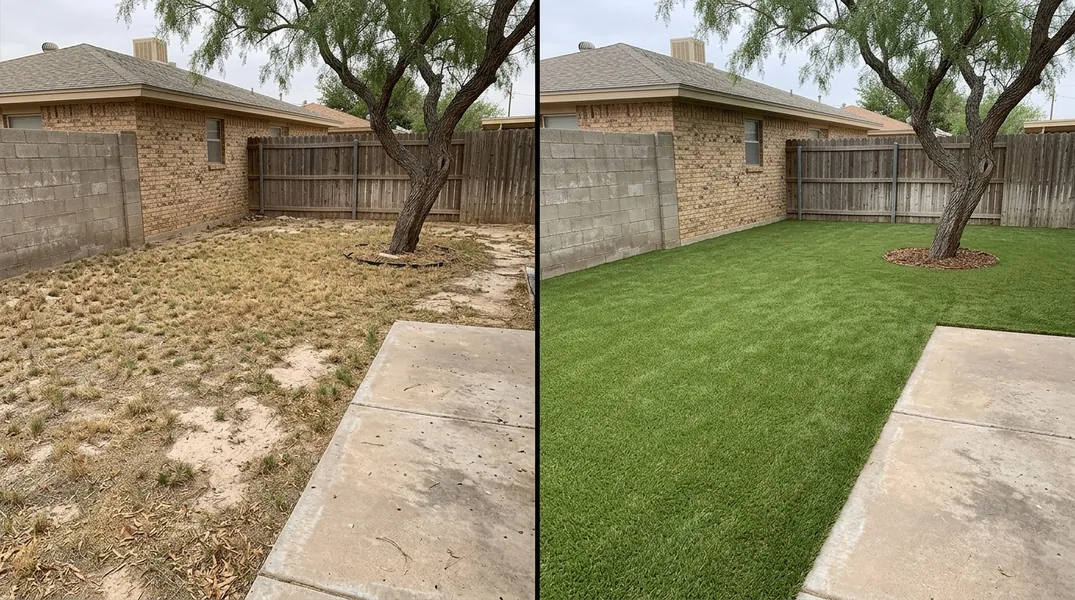
Why Backyard Putting Greens Are Worth the Investment
A backyard putting green transforms your outdoor space into a personal golf practice area, offering convenience and enjoyment year-round. Instead of heading to the range or practice facility, you can step outside and work on your short game whenever inspiration strikes. For homeowners in Odessa, this means practicing in familiar conditions and improving your consistency without the drive.
Beyond the recreational value, a well-designed putting green adds aesthetic appeal to your landscape. Modern artificial turf has come a long way, and today's putting green surfaces look remarkably natural while requiring minimal maintenance. You won't need to mow, water, or treat for weeds like a natural grass green. This durability makes Putting Green Installation an attractive option for busy homeowners who want a functional, beautiful outdoor feature without the constant upkeep.
Designing Your Backyard Putting Green: Layout and Slope Considerations
The design phase is critical to creating a putting green that plays realistically and challenges your skills appropriately. Start by assessing your available space. Most residential putting greens range from 500 to 2,000 square feet, though you can go larger or smaller depending on your yard. Consider the sun exposure, drainage patterns, and proximity to trees or structures that might cast shadows or interfere with play. In Odessa, where sunlight is abundant, you'll want to ensure your green has adequate shade during peak afternoon hours to keep players comfortable.
Slope and contour are what separate a mediocre putting surface from one that truly challenges you. A properly designed green should have subtle breaks and elevation changes that force you to read the grain and adjust your stroke. However, slopes that are too steep become frustrating rather than fun. Most professional designers recommend slopes between 2 and 4 percent for residential greens. Work with your installation team to map out the contours using laser levels and topographic surveys. The goal is to create multiple pin positions so you can practice different approach angles and distances. A well-contoured green keeps practice sessions interesting and helps you develop better distance control.
Putting Green Turf: Choosing the Right Artificial Grass Material
The quality of your putting green turf directly impacts how the ball rolls and how the surface performs over time. Not all artificial grass is suitable for putting greens. Standard lawn turf is too thick and has too much pile height to allow a ball to roll smoothly. Putting green specific turf typically features a shorter pile height (between 0.5 and 1.25 inches), denser backing, and materials engineered to mimic the firmness and ball response of natural bent grass or bermuda.
When selecting turf material, look for options that offer consistent ball roll, good drainage, and UV resistance to handle the intense Texas sun. Premium putting green turf includes features like realistic color variation, perforated backing for water drainage, and infill systems that stabilize the blade and improve roll consistency. The infill material (usually silica sand or a combination of sand and rubber) plays a crucial role in how the ball behaves. Proper infill depth and distribution ensure true roll and prevent the putt from breaking unexpectedly due to uneven surface conditions. Your installation team should discuss these technical specifications with you during the planning phase.
True Roll: How to Achieve Consistent Ball Movement on Your Green
Achieving a true roll on your backyard putting green requires precision in both design and installation. True roll means the ball travels in a predictable path without unexpected breaks or inconsistencies caused by surface irregularities. This depends on several factors working together: proper base preparation, correct slope design, quality turf material, appropriate infill depth, and regular maintenance. If any of these elements is compromised, your putts won't roll as expected, and you'll lose confidence in your practice sessions.
Base preparation is foundational to true roll. The subgrade must be compacted evenly and graded to match your designed contours precisely. Many installers use laser-guided grading equipment to ensure the base is level to within a quarter inch over long distances. Once the base is ready, the artificial turf is laid and secured, then infill material is applied and distributed evenly. The infill is brushed and settled to create a firm, consistent playing surface. After installation, your green should be allowed to settle for a few days before heavy use. Ongoing maintenance, including regular brushing and occasional infill adjustment, keeps the roll true as the green ages. This is why working with experienced installers who understand the technical demands of putting green construction makes a real difference in your final product.
Putting Through Spring Wind: Designing for Odessa Weather Conditions
Spring winds in Odessa can be significant, and if you're serious about practicing your short game, you need a putting green that holds up to these conditions and lets you practice in realistic scenarios. Wind affects both the trajectory of your putt (though less dramatically than a full swing) and your ability to read the green accurately. Designing with wind in mind means considering the orientation of your green and how natural features can provide some wind protection without creating dead spots or uneven conditions.
Position your green where existing structures, fences, or landscaping can provide partial wind breaks without completely blocking airflow. Dense wind barriers can actually create turbulence that's harder to read than steady wind. Consider installing a small berm or using strategic plantings of native Texas shrubs to deflect wind rather than block it entirely. This way, you'll practice in conditions similar to what you'd encounter on actual courses. The artificial turf itself should be securely anchored and properly weighted at the edges to prevent movement during windy conditions. A well-installed green with proper seaming and edge securing will remain stable even when spring gusts pick up. If you're planning your putting green project and want to discuss how to optimize for local weather, contact Odessa Artificial Grass Installation for a consultation.
Backyard Putting Green Cost in Odessa: What to Budget
The cost of a backyard putting green installation varies based on size, complexity, turf quality, and site conditions. A small, simple green (around 300 to 500 square feet) with minimal contouring might cost between 4,000 and 8,000 dollars. Mid-sized greens (800 to 1,500 square feet) with moderate slopes and multiple pin positions typically range from 10,000 to 20,000 dollars. Larger, more elaborate greens with significant elevation changes and premium turf materials can exceed 25,000 dollars. These figures include base preparation, turf installation, infill materials, and basic features like a chipping area or practice apron.
When evaluating pricing, remember that a quality installation is an investment that pays dividends through years of enjoyment and improved golf skills. Cheaper installations that cut corners on base preparation or use lower-grade turf materials often result in poor ball roll, drainage issues, and premature wear. It's worth spending a bit more upfront to get a green that plays true and lasts. Additional features like lighting, seating areas, or integration with other landscape elements will increase the total cost but enhance the overall functionality and appeal of your outdoor space. For a detailed quote tailored to your specific project, call Odessa Artificial Grass Installation at (432) 888-7930 or request a free estimate to discuss your vision and budget.
Maintenance and Long-Term Care for Your Putting Green
Once your putting green is installed, proper maintenance ensures it continues to play true and look great for years to come. Regular brushing is the most important maintenance task. You should brush your green at least weekly, more frequently if it gets heavy use. Brushing restores the blade texture, removes dust and debris, and helps the infill stay evenly distributed. Use a stiff-bristled brush or a specialized putting green brush, working in multiple directions to avoid creating grain patterns that affect roll.
Inspect your green seasonally for any signs of wear, damage, or infill migration. In areas with heavy foot traffic, you may need to add infill periodically. Check the perimeter and seams to ensure they remain secure and that water drains properly. During spring, when winds are strongest in Odessa, pay extra attention to edge securing and seams to make sure nothing has shifted. If you notice areas where the ball isn't rolling true or the surface feels uneven, address these issues promptly before they worsen. With consistent care and attention, your artificial grass putting green will provide reliable performance and enjoyment for ten years or more.
Looking for a professional artificial grass installation company in Odessa? Odessa Artificial Grass Installation responds fast for all your artificial grass installation needs.
Get a Free Quote